The Event Staffing Checklist for Staff Ratios, Pay and Briefings
October 11, 2026
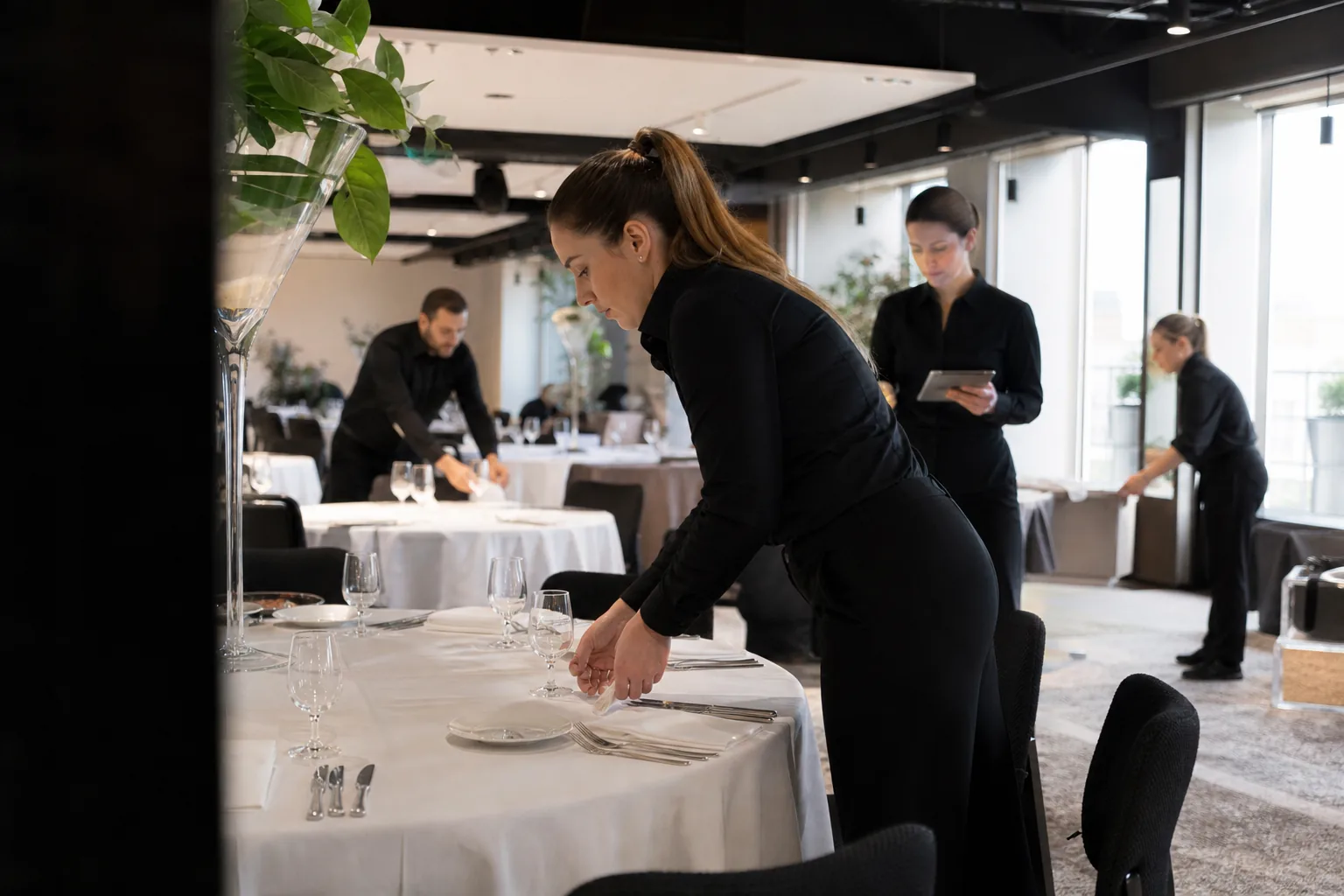
To staff an event, start from your guest count and service style, work out how many servers, bartenders, setup crew and front-of-house staff each role needs, add a buffer for the busiest hour, and pay at or above the local going rate for short-notice event work. This checklist walks through each step.
Event staffing goes wrong in predictable ways. Too few people at the bar in the first hour. Nobody assigned to the coat check. Setup crew booked for the wrong arrival time. A server who didn't know the dress code. None of these are hard problems, they're planning problems, and a checklist fixes most of them. Whether you're a venue manager, a caterer, an event agency or someone planning a company party, the steps below give you a staffing plan you can actually run.
Step 1. Define the event before you count heads
Staff numbers come from the shape of the event, so start there. Write down:
- Guest count: expected and maximum.
- Service style: plated dinner, buffet, family style, standing reception with passed food, or drinks only.
- Bar: none, beer and wine, full bar, or cocktail menu.
- Timeline: arrival, setup, guest arrival, service peaks, end time, breakdown.
- Venue layout: number of rooms, floors, bar stations and entrances.
- Extras: registration desk, coat check, cloakroom, valet, brand activation, photographer.
A plated dinner for 120 needs a very different team from a standing reception for 120. Get this sheet right and the numbers follow.
Step 2. Use ratios as a starting point
Planners and caterers commonly use rules of thumb for staff per guest. They vary between sources and depend on how polished the service needs to be, so use them as a first draft and adjust with experience.
Servers
- Plated dinner: a common guideline is about one server per 10 to 20 guests. Formal multi-course service sits at the tighter end.
- Buffet: fewer servers are needed, often about one per 25 to 40 guests, mainly to clear plates and restock.
- Standing reception with passed food: plan enough servers that trays reach every part of the room regularly.
Bartenders
- Beer and wine: often about one bartender per 75 to 100 guests.
- Full bar: about one per 50 to 75 guests.
- Cocktail menu: more, because each drink takes longer.
Our guide to the cost of hiring a bartender goes deeper on bar staffing and budgeting.
Support roles
- Barbacks: one for every two or three bartenders at busy events keeps ice, glassware and stock moving.
- Setup and breakdown crew: depends on the furniture, decor and load-in. Ask the venue how long similar events take.
- Front of house: registration, coat check and greeters, often one or two per entrance at peak arrival.
- Captain or shift lead: one person who runs the team on the floor and talks to you.
Step 3. Plan for the peak, not the average
Most events have one or two rushes: guest arrival, the first drinks order, dinner service, the moment speeches end. Staff for those moments. Some ways to do that without paying a full team all night:
- Book a few staff for a shorter shift covering arrival and dinner only.
- Have servers pass a welcome drink to take pressure off the bar.
- Open a second bar station for the first hour.
- Schedule setup crew to return for breakdown rather than wait through the event.
Add a small buffer for no-shows. Even reliable teams have the occasional illness. One extra person on a large event is cheap insurance.
Step 4. Set fair pay
Event work is usually paid hourly, with a minimum shift length. Rates depend on city, role, date and how much notice you give. Weekends, holidays and peak season cost more, and short notice almost always does. Rather than guess, look at what similar gigs in your area pay. When you post on GigList, the gig builder suggests a budget band for the role and location, which helps you start in the right range.
Be clear about:
- Hourly rate and minimum hours.
- Whether setup and breakdown time is paid (it should be).
- Overtime if the event runs late.
- Tips or gratuity policy.
- Meals or breaks during long shifts.
- Travel, parking or late-night transport for venues that are hard to reach.
Paying fairly is the most reliable way to avoid no-shows. People keep commitments to clients who respect their time.
Step 5. Write the gig posts
Post one gig per role, not one vague "event staff needed" post. Each should include:
- Role, date, start and end times, and arrival time.
- Venue city or neighbourhood, and parking or transit notes.
- Number of people needed in that role.
- Dress code and any uniform provided.
- Required experience or certifications, such as a responsible alcohol service certificate for bartenders where your state requires one.
- Rate, minimum hours and how overtime works.
- One screening question, for example "Which events have you worked in the last six months, and in what role?"
Our hire event staff page is built for exactly this. You post a shift with the number of seats you need, and GigList returns a ranked shortlist of people near the venue who are available that date. For a general walkthrough of writing posts, see how to post a gig that gets qualified applicants.
Step 6. Brief the team before the day
A short written briefing sent a day or two before prevents most problems on the night. Include:
- Arrival time and entrance, plus who to report to.
- The timeline with service peaks marked.
- Floor plan with stations.
- Menu and allergens, and the drinks list.
- Dress code, again.
- Rules on phones, breaks, alcohol service and guest behaviour.
- A phone number for the shift lead.
Step 7. Run the day and close it out
- Check in everyone on arrival and confirm you have the numbers you need. Call your buffer if someone's missing.
- Walk the floor during the peaks and move people where queues form.
- Finish with breakdown and a quick check that the venue is left as agreed.
- Pay on time and note who you'd book again.
That last step is where repeat events get easier. If you staff events often, keep a bench of people who did well. On GigList Business and Agency plans you can save talent pools, clone last event's shift and invite your bench directly, so the next event takes minutes to staff. Plans are subscription only, with no per-gig fees. See the details on the pricing page.
The quick checklist
- Guest count, service style, bar type and timeline written down.
- Staff per role calculated from ratios and adjusted for peaks.
- Buffer of at least one person for larger events.
- Rates, minimum hours, overtime and tips agreed.
- One gig post per role with date, times, location and dress code.
- Briefing sent a day or two ahead.
- Check-in, floor walk, breakdown and payment on the day.
- Notes on who to rebook.
Common staffing mistakes and how to avoid them
Even experienced planners repeat a handful of mistakes. Most of them come from planning around the average moment of the event instead of the hardest one.
- Booking everyone for the full event. Setup crew and some servers are only needed at the start or the end. Split shifts save money without hurting service.
- Forgetting the arrival rush. Coat check, registration and the bar all peak in the same twenty minutes. Put extra people there, then move them.
- No clear lead on the floor. Without one named person in charge, small problems wait for you to notice them. Name a captain for any team larger than a handful of people.
- Vague dress codes. "Smart black" means different things to different people. Say exactly what to wear, including shoes, and whether an apron or uniform is provided.
- Unclear payment terms. Staff want to know when and how they're paid. Say it in the gig post and again in the briefing.
- No plan for running late. Events overrun. Agree in advance how overtime is paid so nobody leaves halfway through breakdown.
Fixing these costs almost nothing. It mostly takes ten minutes of thinking through the timeline from a staff member's point of view, hour by hour.
Frequently asked questions
How many staff do I need per guest at an event?
It depends on service style. Common guidelines are about one server per 10 to 20 guests for a plated dinner, one per 25 to 40 for a buffet, and one bartender per 50 to 75 guests for a full bar. Adjust for your peak moments.
How far in advance should I book event staff?
As early as possible for weekends, holidays and peak season. Smaller weekday events can sometimes be staffed with a few days of notice if the pay is fair and the post is clear.
Should setup and breakdown time be paid?
Yes. Setup and breakdown are part of the shift. Including them in the paid hours avoids disputes and helps you attract reliable staff.
What should an event staff briefing include?
Arrival time and entrance, the event timeline, floor plan, menu and allergens, dress code, rules on breaks and alcohol service, and a phone number for the shift lead.
How do I avoid no-shows?
Pay fairly, confirm the booking a day or two before, send a clear briefing and keep a small buffer on larger events. Rebooking people who showed up reliably before also helps.